What Is Ceramic Window Tint & Why Does Film Quality Matter?
What Is Ceramic Window Tint? Benefits, Quality, and Performance
Ceramic window tint is an automotive film that uses ceramic particles to control infrared heat while reducing glare and ultraviolet exposure. Unlike metallic films, ceramic tint can provide these benefits without interfering with mobile phones, GPS navigation, radio reception, or other electronic signals.
Film quality matters because not every tint provides the same heat rejection, color stability, clarity, or service life. Hunter’s Auto Glass installs HITEK Films Ceramic Black at our Covington shop for drivers who want a durable upgrade over entry-level dyed tint.
How Ceramic Window Tint Works
Sunlight carries visible light, ultraviolet radiation, and infrared energy through your vehicle’s windows. Visible light affects brightness and privacy, while infrared energy contributes to the heat you feel inside the cabin. UV exposure can also contribute to fading and deterioration across seats, dashboards, trim, and other interior surfaces.
Ceramic tint contains particles designed to reject a portion of that infrared energy. This helps limit heat buildup without requiring you to choose the darkest film available. A lighter ceramic shade may still offer meaningful heat control because darkness and heat rejection are not the same measurement.
HITEK Ceramic Black combines a dyed base with nano-ceramic technology. The dyed layer gives the film its deep black appearance, while the ceramic component provides stronger heat rejection than standard dyed film. The result is a finish designed to complement factory-tinted glass while improving cabin comfort.
Ceramic Tint Compared with Standard Dyed Tint
Standard dyed film primarily uses layers of dye to absorb sunlight and darken the vehicle’s windows. It can provide privacy, glare reduction, and a different exterior appearance at a lower initial price. Its performance and appearance, however, may decline sooner than those of a higher-quality ceramic film.
Lower-quality dyed tint is more likely to fade, develop a purple tone, bubble, crack, or peel as it ages. Replacing failed tint adds another installation expense and requires the old adhesive and film to be removed before new material can be applied.
Ceramic tint is selected for stronger heat rejection, better color stability, and longer-lasting performance. HITEK Ceramic Black uses weatherable polyester, a pressure-sensitive adhesive, and a scratch-resistant coating designed to withstand regular automotive use. Its metal-free construction also makes it compatible with vehicles that rely on embedded antennas and connected technology.
Ceramic tint costs more than basic dyed film because the materials and performance are different. The decision is less about choosing the least expensive dark film and more about how long you expect the tint to last and what you want it to accomplish.
Benefits of Ceramic Tint on the Northshore
Ceramic tint is especially useful in an area where parked vehicles can accumulate heat quickly under direct sunlight. It cannot make a vehicle heatproof, but it can reduce the amount of solar energy entering through the glass and help the cabin feel more manageable.
The practical benefits include:
- Stronger infrared heat rejection
- Reduced glare during daytime driving
- Protection against UV exposure
- Increased privacy
- Improved interior comfort
- Better color stability
- Scratch-resistant performance
- No interference with vehicle signals
- A clean black appearance
Reducing UV exposure also helps protect the vehicle’s interior. Upholstery, leather, plastic trim, and dashboard materials can fade or deteriorate after years of sunlight. Window film creates an additional layer of protection while helping occupants avoid direct exposure through the side glass.
Glare control can improve visual comfort during bright morning and afternoon driving. The selected shade still needs to provide appropriate visibility, particularly at night, so the darkest available tint is not automatically the best option for every driver.
Why Professional Tint Shops Use Better Film
A dependable tint shop looks beyond the film’s color. Material construction, heat rejection, adhesive quality, optical clarity, color stability, and manufacturer support all affect how the finished installation performs.
Quality film should maintain a consistent appearance across the windows without creating distracting distortion. Its adhesive should form a durable bond, and its surface should resist the small scratches that can occur through regular window use. A color-stable product should also retain its intended shade instead of fading unevenly.
Product consistency matters to the installer as well. A reputable film gives the shop reliable specifications and predictable installation characteristics across different vehicles. That allows the installer to recommend a product based on the customer’s needs rather than selling tint solely by how dark it looks.
HITEK Ceramic Black is backed by the film manufacturer’s lifetime automotive warranty against covered problems such as fading, cracking, and delamination. Hunter’s Auto Glass uses it because the product combines ceramic heat rejection with a factory-style black appearance and long-term durability.
Film Quality Is Only Part of the Installation
Even premium ceramic film can perform poorly when it is installed incorrectly. Automotive windows have curves, seals, trim, and moving components that require accurate preparation and film placement. Dust, trapped debris, creases, contaminated adhesive, and poorly finished edges can shorten the life of the installation.
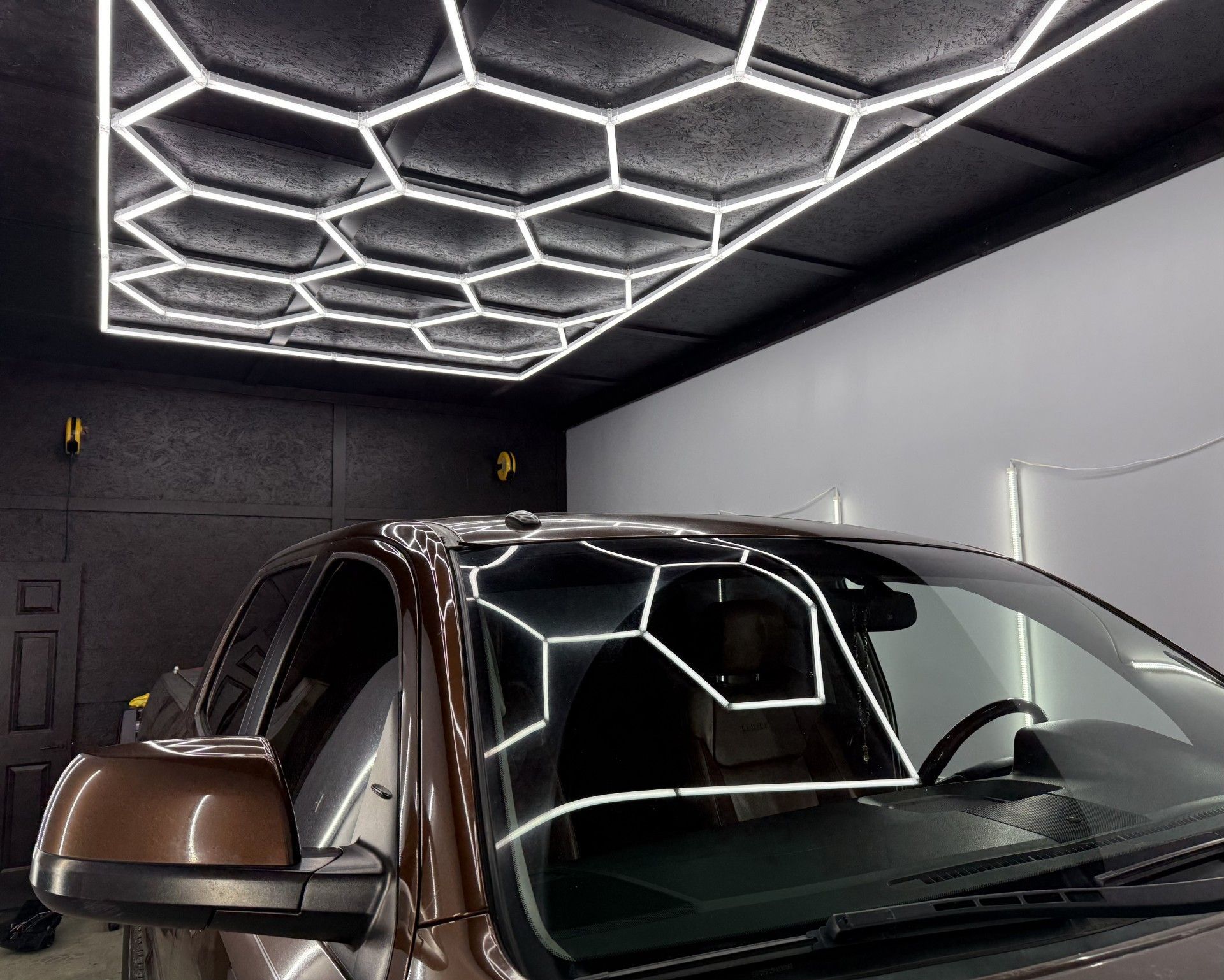
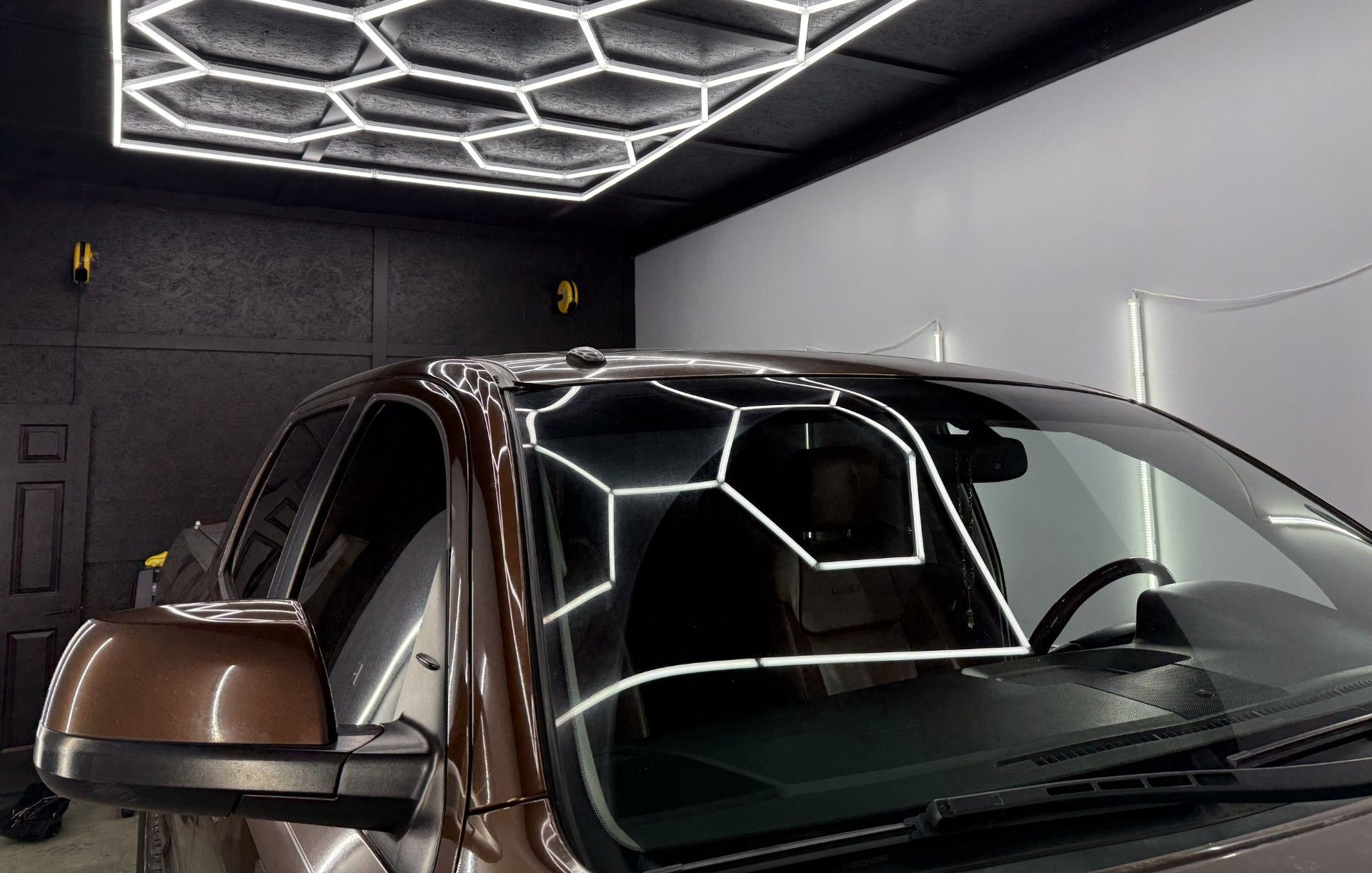
Hunter’s Auto Glass completes automotive tinting inside our Covington shop rather than offering mobile tint installation. The controlled environment limits exposure to outdoor dust, wind, and moisture while the film is measured, shaped, applied, and finished.
Tinting appointments are scheduled as vehicle drop-offs. The installation time depends on the vehicle, the number of windows being tinted, and whether old film must be removed. Providing the vehicle year, make, and model when scheduling helps the shop prepare for the window layout and requested coverage.
Choosing the Right Ceramic Tint Shade
The tint percentage describes visible light transmission, or how much visible light passes through the film. A lower percentage creates a darker appearance, while a higher percentage allows more visible light through the window.
Hunter’s Auto Glass offers HITEK Ceramic Black in a broad selection of shades, including 2%, 5%, 15%, 20%, 30%, 35%, 50%, and 70%. That range gives you options for privacy, appearance, glare control, and visibility.
Shade selection should account for the vehicle, the windows being tinted, your daytime and nighttime driving, existing factory tint, and applicable Louisiana requirements. A professional recommendation should consider all of those factors instead of automatically steering every customer toward the darkest film.
Schedule Your Ceramic Window Tinting in Covington and the Northshore Area
Hunter’s Auto Glass provides HITEK Films Ceramic Black window tinting at our Covington shop for drivers throughout the Northshore. Contact our team to compare shades and schedule a drop-off appointment for your car, truck, or SUV.
We serve customers from Covington, Madisonville, Abita Springs, Mandeville, and surrounding communities. Bring your vehicle to our shop for ceramic window tint designed to provide lasting heat control, UV protection, privacy, and a clean finished appearance.